

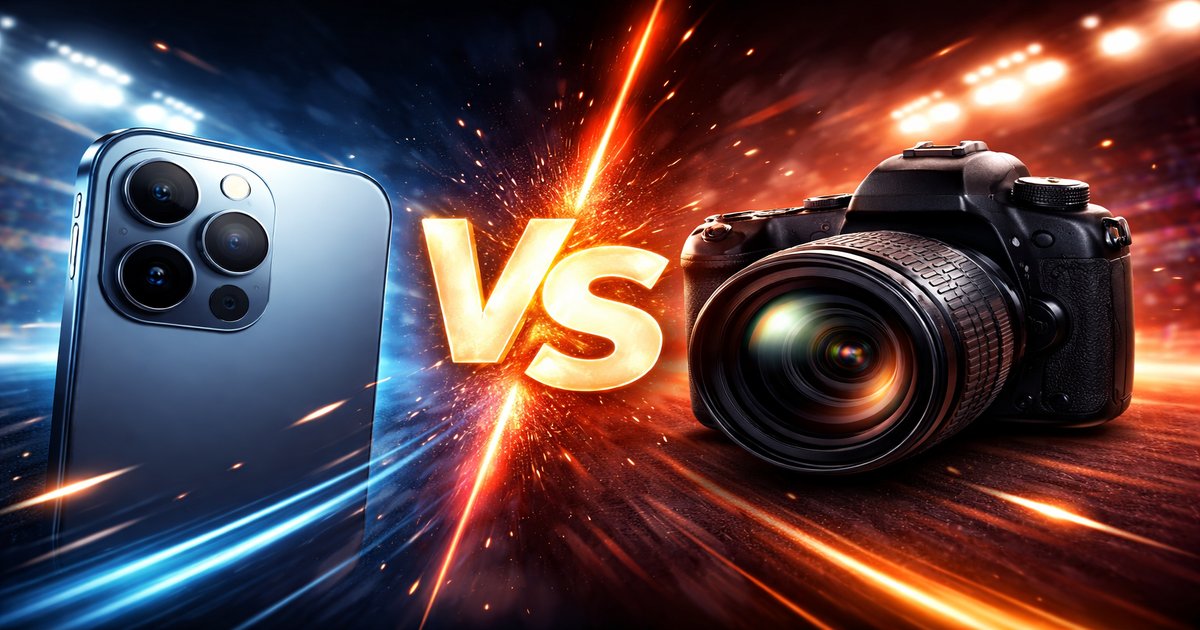
You’re heading out on an adventure and want to capture every moment in stunning detail. Do you grab your trusty phone or lug around a dedicated camera? This decision could make or break your Instagram feed or your family photo album, so let’s dive into the nitty-gritty details to find out which is the better choice for you.
| Feature | Phone Camera | Camera |
|---|---|---|
| Portability | ✓ | ✗ |
| Image Quality | Good | Excellent |
| Manual Controls | Limited | Extensive |
| Battery Life | Average | Long |
| Price Range | $300-$1,200 | $400-$5,000+ |
| Zoom Capability | Digital | Optical |
✅ phone camera Pros
- Highly portable and always with you.
- Instant sharing to social media platforms.
- Integration with apps for quick editing.
❌ phone camera Cons
- Limited manual control over settings.
- Lower image quality in low light conditions.
- Digital zoom reduces image quality.
✅ camera Pros
- Superior image quality, especially in low light.
- Interchangeable lenses for versatility.
- More extensive manual control over shots.
❌ camera Cons
- Bulky and less convenient to carry around.
- More expensive, especially with additional lenses.
- Requires some learning curve for beginners.
Performance in Various Conditions
Whether you’re snapping a quick shot at a café or capturing a sunset at the beach, a phone camera is your ultra-convenient friend. It performs admirably in good lighting but struggles in low light. Dedicated cameras, on the other hand, shine in any lighting condition due to their larger sensors and better lenses. They’re your go-to for professional-quality images, especially in challenging lighting situations where a phone camera might falter.
Usability and Convenience
A phone camera wins hands down on convenience. It’s always with you, fits in your pocket, and is ready to shoot at a moment’s notice. You can edit and upload instantly, making it perfect for social media enthusiasts. Dedicated cameras require more prep—choosing the right lens, adjusting settings, and often carrying a bag. However, they do reward you with superior control and results, appealing to photography enthusiasts who value quality over convenience.
Value for Money
Phones are a jack-of-all-trades; they offer decent photography, communication, and entertainment. However, you pay a premium for their versatility. Cameras, albeit expensive, are dedicated tools that offer unparalleled image quality and longevity. If photography is your passion, investing in a good camera pays off in the long run. For casual users who prioritize convenience, a high-end phone might be a more practical choice.
Here’s the deal: phone cameras are evolving fast, but they still can’t match a dedicated camera’s performance, particularly in low light or fast action shots. Battery life is another hidden issue with phones; heavy camera use drains it quickly, leaving you without a phone. Cameras, meanwhile, can swap batteries on the fly, ensuring you won’t miss a moment.
Our Final Verdict: Which One Should You Buy?
If you’re an on-the-go shooter who values convenience and loves sharing photos instantly, stick with a high-quality phone camera. It’s perfect for social media mavens and casual photographers. However, if you’re serious about photography and want the best image quality, a dedicated camera is a no-brainer. It’s the ideal choice for hobbyists and professionals who demand control and versatility in their shots.
Do phone cameras have optical zoom?
Most phone cameras rely on digital zoom, which can degrade image quality. Some high-end models offer limited optical zoom, but it still doesn’t match the capability of dedicated camera lenses.
How long do camera batteries last compared to phones?
Camera batteries generally last longer than those in phones, especially if you’re frequently shooting. Plus, you can carry spares and swap them out easily, which isn’t possible with most phones.
Is a camera really worth the investment if I already have a phone?
It depends on your needs. If photography is a serious hobby or profession, a dedicated camera is worth the investment for its superior quality and versatility. For casual use, a phone may suffice.
