

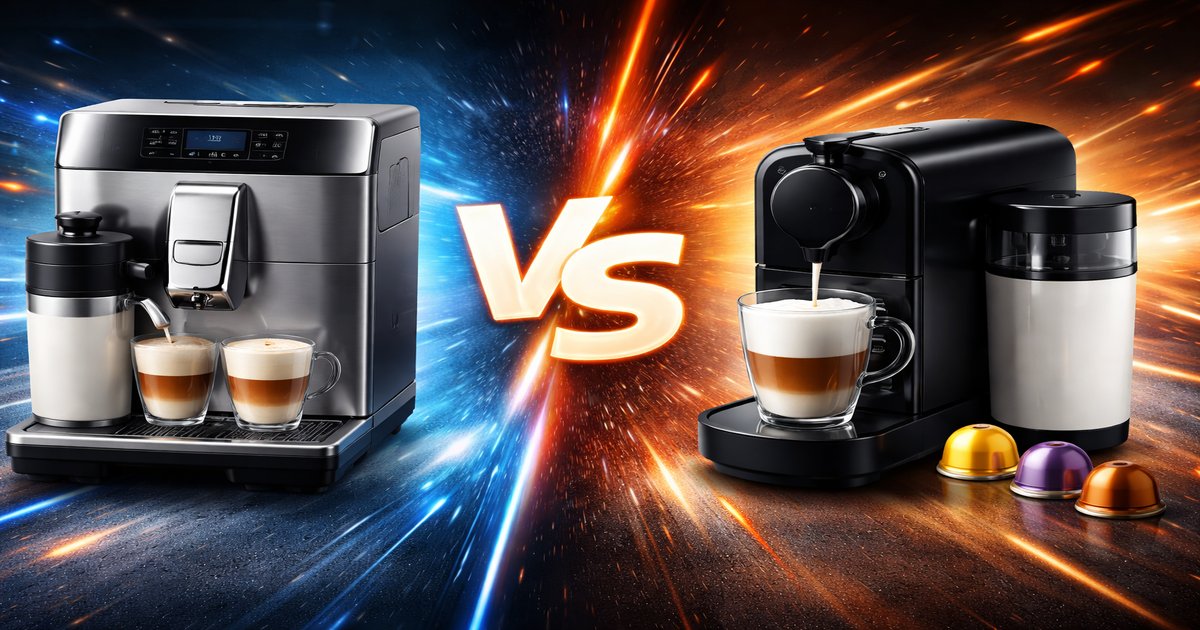
You’re standing in the kitchen, craving a perfect cup of espresso to kickstart your day. But with so many options, how do you choose the right machine? Let’s dive into the battle between DeLonghi and Nespresso to find your match.
| Feature | DeLonghi | Nespresso |
|---|---|---|
| Pressure (Bars) | 15 | 19 |
| Milk Frother | ✓ | Varies by model |
| Capsule Compatibility | None | ✓ |
| Customization Options | High | Low |
| Price Range | $150 – $600 | $100 – $450 |
| Warranty | 1 year | 2 years |
| Size & Portability | Bulky | Compact |
✅ delonghi Pros
- Offers customizable brewing options.
- Integrated milk frother for cappuccinos and lattes.
- Sturdy build and durable components.
❌ delonghi Cons
- Bulky design takes up counter space.
- No capsule compatibility.
- Requires more maintenance and cleaning.
✅ nespresso Pros
- Compact and space-saving.
- Easy to use with one-touch operation.
- Wide range of capsules for flavor variety.
❌ nespresso Cons
- Limited customization options.
- Additional cost for milk frother if not included.
- Depends on capsule availability and cost.
Performance
DeLonghi’s 15-bar pressure system offers a robust espresso pull, but Nespresso’s 19-bar system is designed for consistent, barista-quality shots. If you’re a coffee connoisseur who savors the nuances of espresso, Nespresso’s precision might be more appealing. However, DeLonghi gives you more control over the brewing process, allowing you to adjust grind size, temperature, and shot length, which is perfect for those who love to tinker with their coffee.
Build Quality
DeLonghi machines are known for their sturdy construction and long-lasting components. They’re built like tanks, but you’ll notice the bulk when you try to find counter space. Nespresso, on the other hand, focuses on sleek, compact designs that fit into modern kitchens without fuss. While both brands offer solid build quality, if durability is your top priority, DeLonghi has the edge. For a more minimalist setup, Nespresso wins.
Value
Nespresso offers budget-friendly options with the convenience of pre-measured capsules, making it ideal for busy mornings. DeLonghi machines tend to be pricier, but they offer more versatility and potential cost savings on coffee beans in the long run. If you want a simple, no-fuss coffee experience, Nespresso’s value is undeniable. But for those willing to invest in a machine that offers a wide range of coffee styles, DeLonghi is worth every penny.
Both brands have hidden quirks. DeLonghi machines demand regular maintenance, which can be a hassle if you’re always on the go. Nespresso’s capsule system means you’re locked into their ecosystem, which might get pricey if you drink lots of coffee. If you’re eco-conscious, the waste from capsules might be a deal-breaker.
Our Final Verdict: Which One Should You Buy?
If you crave a customizable coffee experience and don’t mind a bit of maintenance, DeLonghi is your best bet. It’s perfect for the coffee enthusiast who loves experimenting with different brewing techniques. On the other hand, if convenience, space-saving, and a swift morning routine are your priorities, Nespresso is the way to go. It’s ideal for someone who values ease of use and variety in their daily brew.
Does DeLonghi work with any capsules?
No, DeLonghi machines generally do not support capsule use. They are designed for ground coffee, giving you freedom with the type of beans you prefer.
Can I use Nespresso pods in a DeLonghi machine?
Not directly. DeLonghi machines are not designed for Nespresso pods. You would need a separate attachment or adapter, which is not recommended.
How long do these machines typically last?
With proper care, both DeLonghi and Nespresso machines can last several years. Nespresso offers a 2-year warranty, which reflects confidence in their longevity.
