

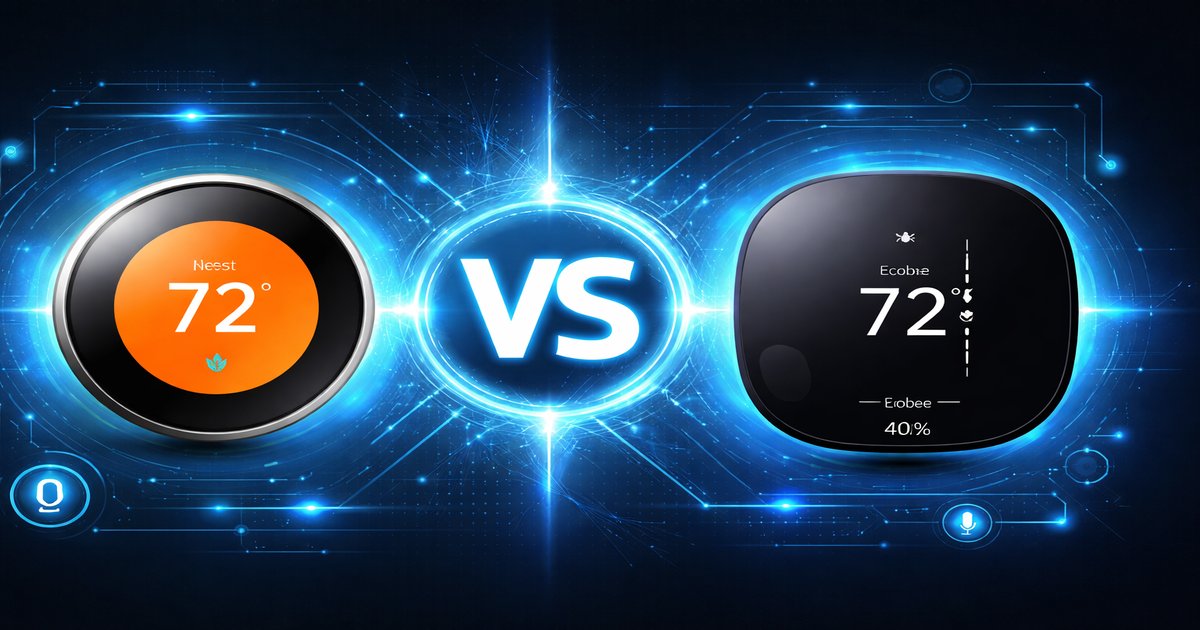
Trying to decide between the Nest and Ecobee thermostats can feel like picking teams in a game where both sides seem equally strong. You’re not just looking for a gadget; you want a thermostat that will seamlessly integrate into your smart home while also saving you money on your energy bills.
| Feature | Nest | Ecobee |
|---|---|---|
| Smart Assistant Compatibility | Google Assistant, Alexa | Alexa, Google Assistant, Siri |
| Remote Sensors | ✗ | ✓ |
| Motion Detection | ✓ | ✓ |
| Energy Reports | ✓ | ✓ |
| Touchscreen Display | ✗ | ✓ |
| Price | $129 – $249 | $189 – $249 |
✅ nest Pros
- Intuitive learning capability that adapts to your habits.
- Sleek design that blends well with modern decor.
- Excellent energy-saving features that lower utility bills.
❌ nest Cons
- Lack of remote sensors can lead to uneven temperature control.
- Limited compatibility with Apple’s HomeKit.
✅ ecobee thermostat Pros
- Comes with remote sensors for better room-specific temperature control.
- Compatible with a wider range of smart home systems, including Apple HomeKit.
- Touchscreen display offers a more interactive experience.
❌ ecobee thermostat Cons
- High upfront cost compared to basic Nest models.
- Can be overly reliant on Wi-Fi for optimal functionality.
Performance
When it comes to performance, both Nest and Ecobee excel, but in different ways. Nest’s strength lies in its ability to learn your schedule and adjust the temperature accordingly, which is particularly useful if you have a predictable routine. On the other hand, Ecobee’s remote sensors make it a beast for larger homes where even heating is a challenge. If you’re someone who moves from room to room throughout the day, Ecobee’s sensors will maintain comfort across the board.
Build Quality
Nest wins the beauty contest with its modern, minimalist design that feels like a natural fit in any stylish home. The display is simple and elegant, though it lacks the interactivity of a touchscreen. Ecobee doesn’t lag far behind with its own sleek design, but it’s the touchscreen that sets it apart. The intuitive display feels right at home in a smart house, offering a satisfying tactile experience that Nest just doesn’t give you.
Value
If budget is a concern, the Nest offers a range of models at different price points, allowing you to choose based on how much tech you want. Ecobee generally sits at a higher price point, but the added cost gets you more features, like those game-changing remote sensors. For the budget-conscious who don’t need all the bells and whistles, Nest is a fantastic choice. But if you want the Cadillac of smart thermostats, Ecobee justifies the splurge.
Both thermostats perform best in homes with stable Wi-Fi. Drop that, and you might as well be fiddling with a regular dumb thermostat. Neither is a miracle worker; if your HVAC system is outdated, these devices can’t make up for inefficiencies inherent in your system.
Our Final Verdict: Which One Should You Buy?
Nest is the way to go if you’re looking for a straightforward, intuitive experience and want a thermostat that adapts to your lifestyle without you needing to lift a finger. Ideal for someone who loves simplicity and style. If you’re a tech enthusiast who loves having full control and wants a thermostat that plays nice with a broader range of smart home devices, Ecobee is your match. It’s perfect for larger homes where temperature consistency is key.
Is Nest compatible with Apple HomeKit?
No, the Nest thermostat does not support Apple HomeKit, which could be a dealbreaker for Apple ecosystem users.
Do I need professional installation for these thermostats?
Both Nest and Ecobee are designed for DIY installation, but if you’re not comfortable with wiring, hiring a pro is always a safe bet.
How do the energy savings compare between Nest and Ecobee?
Both offer substantial energy savings, but Nest’s learning capabilities can optimize savings automatically over time, while Ecobee’s savings depend more on manual settings and sensor placement.
