

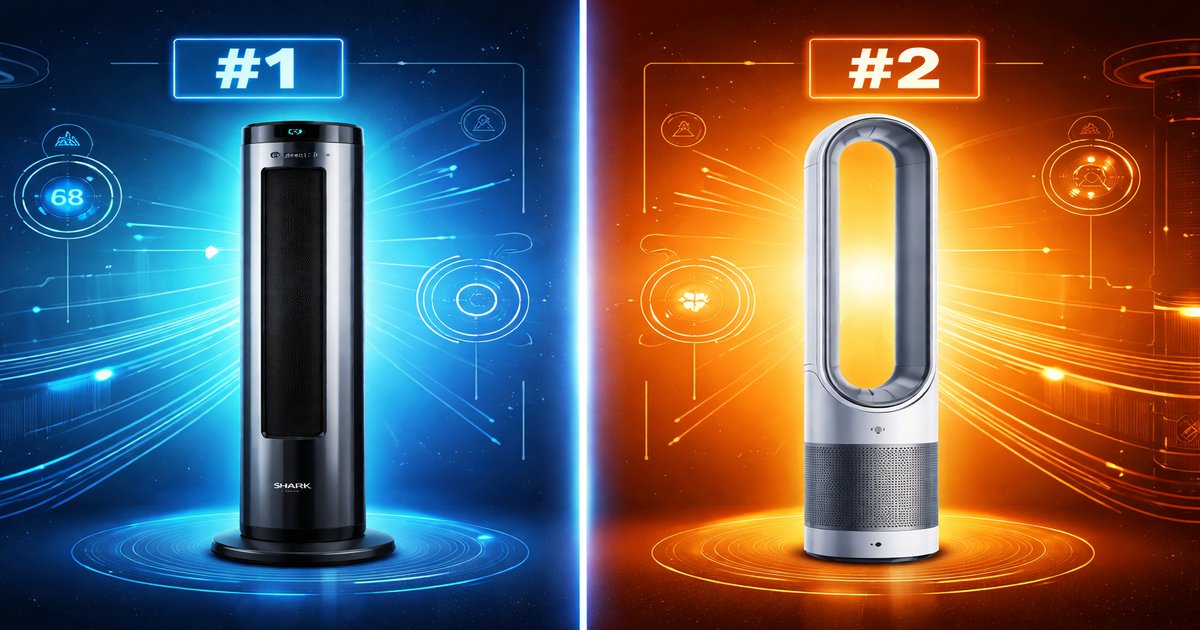
When you’re battling summer heat, a reliable fan makes all the difference. Enter the Shark and Dyson fans, two contenders promising to keep you cool without the noise of a traditional fan. But which one truly delivers the breezy comfort you crave?
| Feature | Shark Fan | Dyson Fan |
|---|---|---|
| Price | $150 | $450 |
| Noise Level | 40 dB | 35 dB |
| Remote Control | ✓ | ✓ |
| Airflow Settings | 3 | 10 |
| Oscillation | ✓ | ✓ |
| Filter Maintenance | Annual | Bi-Annual |
| Smart Features | ✗ | ✓ |
✅ shark fan Pros
- Budget-friendly price.
- Reliable basic performance with three airflow settings.
- Simple design, easy to use.
❌ shark fan Cons
- Lacks advanced features like air purification.
- No smart connectivity.
- Construction feels less premium.
✅ dyson fan Pros
- Sleek design with advanced technology.
- Multiple airflow settings for precise control.
- Includes air purification and smart connectivity.
❌ dyson fan Cons
- High price point.
- Filter maintenance can be costly.
Performance and Airflow
When it comes to performance, the Dyson fan offers ten airflow settings compared to Shark’s three. This means you can tailor the breeze to your exact preference with the Dyson, whether you need a gentle waft while sipping coffee or a strong gust during a home workout. Shark, on the other hand, keeps it simple with fewer options, which might suit you if you’re not fussed about nuanced control. If you’re the kind of person who loves gadgets and customization, Dyson’s your pick. But if you’re just looking for a straightforward cooling solution, Shark gets the job done without frills.
Build Quality and Design
Dyson wins hands down in the design department with its futuristic look and robust build quality. It feels like a premium product because it is one. Shark, however, offers a no-nonsense design that’s more utilitarian. It’s not going to win any design awards, but it will fit unobtrusively into most rooms without drawing attention. If aesthetic appeal is a priority and you’re willing to pay for it, Dyson’s the way to go. But if you’re more about function over form, Shark won’t disappoint, especially considering the price difference.
Value for Money
Here’s where things get interesting. The Shark fan is a bargain at $150, offering solid performance without burning a hole in your pocket. It’s the kind of fan you’ll appreciate if you need reliable cooling on a budget. Dyson, at $450, is an investment in technology and design. You’re paying for more than just cool air; you’re getting a piece of tech that integrates with smart home systems and purifies your air. If you see value in these extras, Dyson justifies its price. Otherwise, Shark offers more bang for your buck if cooling is your sole focus.
Most reviews skip over the fact that both fans require some maintenance. Dyson’s filters can rack up costs over time, and while Shark’s maintenance is simpler, its durability over several years is questionable. Also, Dyson’s smart features, while impressive, might be overkill if you just want a fan to do its basic job.
Our Final Verdict: Which One Should You Buy?
If you’re a tech enthusiast who values design, features, and has the budget, the Dyson fan is your ideal choice. It’s perfect for someone who wants their fan to be part of a smart home ecosystem. On the other hand, if practical cooling at an affordable price is your priority, the Shark fan is the way to go. It’s great for those who want straightforward, effective cooling without extra bells and whistles.
Is the Dyson fan worth the price?
If you value smart features and air purification, and appreciate a sleek design, it is worth the investment. Otherwise, for basic cooling, you might find it expensive.
How noisy are these fans?
The Dyson fan is quieter at 35 dB compared to Shark’s 40 dB. Both are relatively quiet, but Dyson has the edge if noise is a major concern.
How often do I need to change the filters?
Dyson’s filters need changing every six months, adding to the cost. Shark’s annual maintenance is less frequent and cheaper.
