

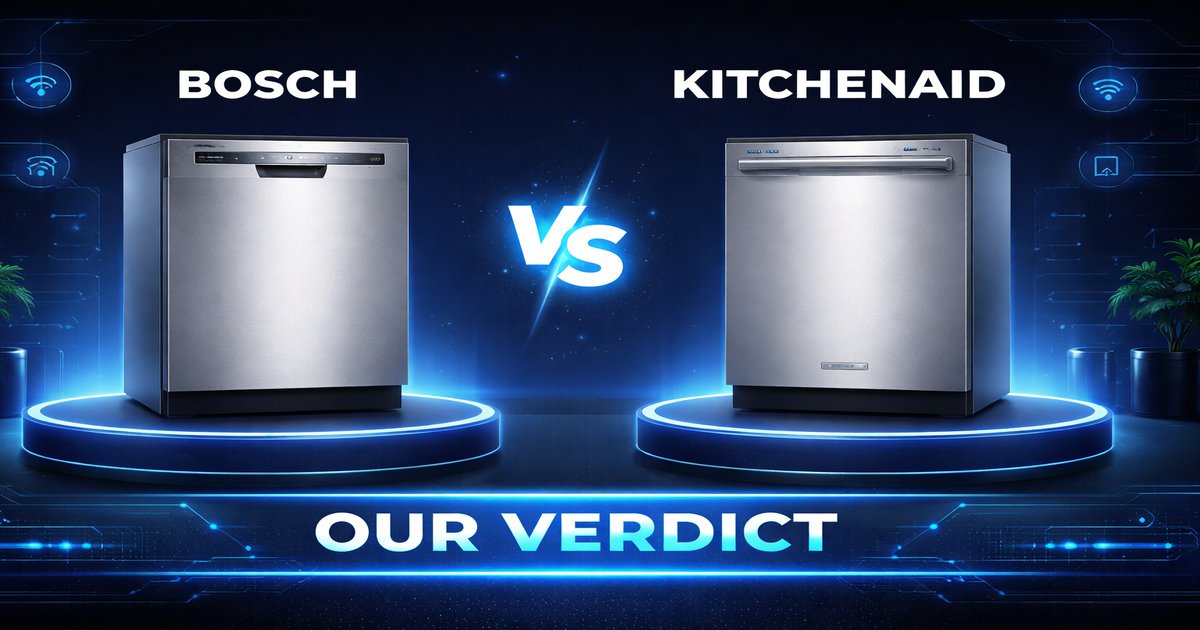
So, you’re tired of the endless cycle of pre-rinsing, dish scrubbing, and still finding spots on your dishes? You’re not alone. Investing in a high-quality dishwasher can save you time and sanity, but choosing between heavy-hitters like Bosch and KitchenAid isn’t a walk in the park.
| Feature | Bosch Dishwasher | KitchenAid Dishwasher |
|---|---|---|
| Noise Level (dB) | 42 dB | 44 dB |
| Price Range | $800 – $1,200 | $900 – $1,400 |
| Drying Technology | Condensation | Extended Heat Dry |
| Third Rack | ✓ | ✓ |
| Energy Efficiency | ENERGY STAR Certified | ENERGY STAR Certified |
| Warranty | 1 Year | 1 Year |
✅ bosch dishwasher Pros
- Ultra-quiet operation at 42 dB.
- Innovative rack designs offer flexible loading.
- Excellent cleaning performance, even on heavily soiled dishes.
❌ bosch dishwasher Cons
- Condensation drying may leave plastics damp.
- Higher upfront cost compared to some competitors.
✅ kitchenaid Pros
- Extended Heat Dry for thorough drying.
- Stylish design with a robust build quality.
- Adjustable racks for better space management.
❌ kitchenaid Cons
- Marginally louder at 44 dB.
- Pricier models can stretch your budget.
Performance: Cleaning and Drying
When it comes to cleaning, Bosch holds the upper hand with its precision spray arms and load sensors that adapt water usage. Even when you throw in a lasagna dish with baked-on cheese, Bosch tackles it without breaking a sweat. KitchenAid isn’t far behind, though. Its ProWash cycle is a solid performer, but it’s the Extended Heat Dry that really makes KitchenAid shine. If you can’t stand wet plastics and prefer your Tupperware bone dry, KitchenAid is your best bet.
Build Quality: Durability and Design
Bosch dishwashers have a reputation for their high-quality European engineering. The stainless steel interior not only looks sleek but resists stains and odors. KitchenAid, on the other hand, offers a more rugged build with a focus on American style and robustness. You’ll find both brands offer adjustable racks, but Bosch’s flexible third rack and RackMatic system are a step ahead for those awkwardly shaped dishes.
Value for Money
Both brands fall in the premium category, but Bosch tends to offer more features at a slightly lower entry price. If noise level and exceptional cleaning are your priorities, Bosch offers great value. KitchenAid, while a bit more expensive, provides superior drying and a slightly more versatile loading space. If you’re willing to pay a bit more for an all-around performer with a focus on drying, KitchenAid might be worth the extra bucks.
Bosch’s drying leaves something to be desired, especially if you use a lot of plasticware. KitchenAid, while solid, might not justify its higher cost if you have an open-plan kitchen where noise is a concern. Both brands require regular maintenance to keep performance top-notch, something many users overlook.
Our Final Verdict: Which One Should You Buy?
If you’re the type who values whisper-quiet operation and top-notch cleaning, Bosch is your match. It’s perfect for those with open-plan kitchens and a preference for European engineering. On the other hand, KitchenAid excels in drying performance and rugged design, making it ideal for users who prioritize a dry finish and robust build, even if it means spending a little extra.
Is the Bosch dishwasher compatible with all types of detergents?
Yes, Bosch dishwashers are designed to work with most standard dishwasher detergents, including pods and liquids.
How long does a typical wash cycle take on a KitchenAid dishwasher?
KitchenAid’s standard cycles typically run between 2 to 3 hours, depending on the selected settings and options.
What is the expected lifespan of these dishwashers?
Both Bosch and KitchenAid dishwashers have a typical lifespan of 10 to 12 years with proper maintenance and care.
