

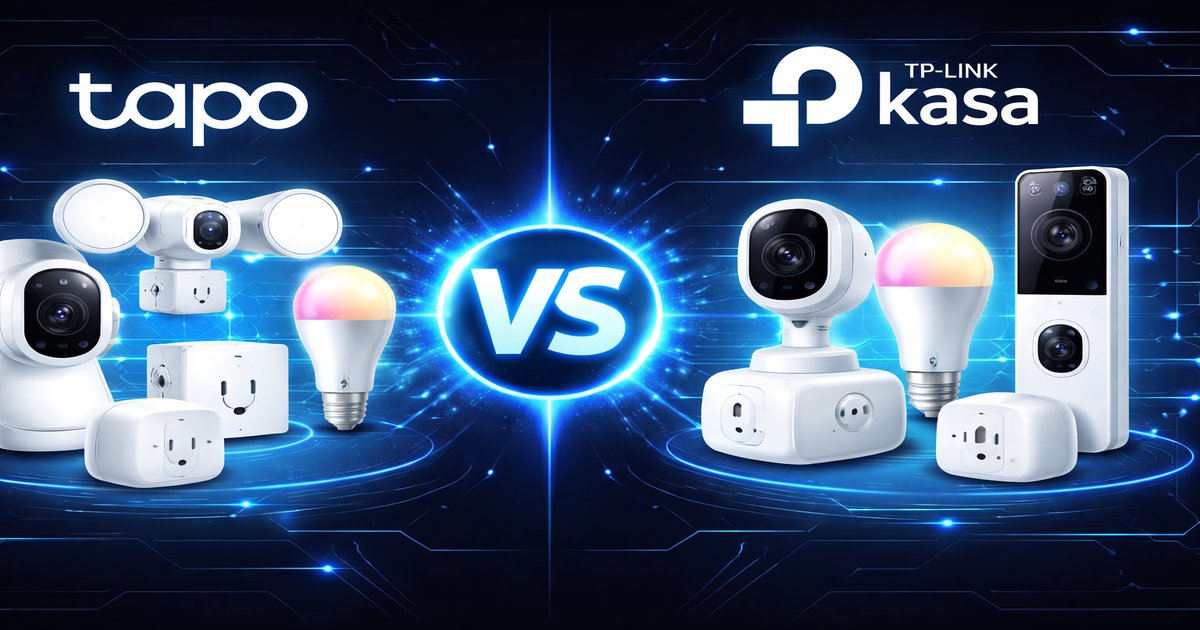
Smart home tech can be a game-changer, but choosing between brands like Tapo and TP-Link Kasa can be a daunting task. You want seamless integration and the best bang for your buck, but you’re not sure which one will light up your home the way you want.
| Feature | Tapo | TP-Link Kasa |
|---|---|---|
| App Control | ✓ | ✓ |
| Voice Assistant Compatibility | Amazon Alexa, Google Assistant | Amazon Alexa, Google Assistant, Microsoft Cortana |
| Energy Monitoring | ✗ | ✓ |
| Pricing | Budget-friendly | Moderate |
| Warranty | 2 Years | 2 Years |
✅ tapo Pros
- Affordable pricing, making it ideal for budget-conscious users.
- Easy to set up and integrate with most smart home systems.
- Compact design that doesn’t block other outlets.
❌ tapo Cons
- Lacks energy monitoring features.
- Limited voice assistant support compared to Kasa.
✅ tp-link kasa Pros
- Comprehensive voice assistant compatibility, including Cortana.
- Includes energy monitoring to track power consumption.
- Robust app features with reliable performance.
❌ tp-link kasa Cons
- Higher price point compared to Tapo.
- Larger design may block adjacent outlets.
Performance and User Experience
When it comes to performance, TP-Link Kasa edges out Tapo with its more comprehensive feature set. The energy monitoring capability is a game-changer if you’re keen on keeping track of your power usage. Kasa’s app is more robust and intuitive, making the user experience smoother and more satisfying. In contrast, Tapo’s simplicity is its strength. If you want a no-fuss setup and operation, Tapo is a solid choice. It’s perfect for those who appreciate a straightforward, hassle-free smart plug.
Build Quality and Design
Tapo is a winner in terms of compact design, which is a crucial factor if you’re working with limited space. It fits snugly into your outlet without obstructing other plugs, which is a huge plus in smaller living spaces. On the other hand, TP-Link Kasa’s larger design might be a drawback if you’re tight on space. However, its build quality feels slightly more robust and durable, which might be a consideration if longevity is your priority.
Value for Money
Tapo’s affordability is its strongest selling point. If you’re dipping your toes into smart home tech and want something that won’t break the bank, it’s hard to beat. However, if you’re looking for a long-term investment with more advanced features like energy monitoring, TP-Link Kasa justifies its higher price. It offers more features that can grow with your smart home ecosystem, making it better value if you’re in it for the long haul.
Tapo is a fantastic entry-level product, but its lack of energy monitoring might become a limitation if you get more serious about energy efficiency. Meanwhile, TP-Link Kasa’s larger size isn’t just a design flaw; it can actually complicate multi-device setups where outlet space is limited.
Our Final Verdict: Which One Should You Buy?
If you’re just starting out with smart home tech and want something budget-friendly, go with Tapo. It’s perfect for the no-nonsense user who prioritizes simplicity and affordability. However, if you’re a tech enthusiast or someone who plans to expand their smart home setup, TP-Link Kasa offers more advanced features and better integration, making it worth the extra investment.
Is Tapo compatible with Apple HomeKit?
No, Tapo does not currently support Apple HomeKit. It’s compatible with Amazon Alexa and Google Assistant.
Can I use TP-Link Kasa outdoors?
Not all TP-Link Kasa devices are designed for outdoor use. You’ll need to look for specific outdoor models within the Kasa lineup.
How reliable is the Wi-Fi connection for these devices?
Both Tapo and TP-Link Kasa generally offer stable Wi-Fi connections, but it’s always good to ensure a strong network signal where you plan to install them.
